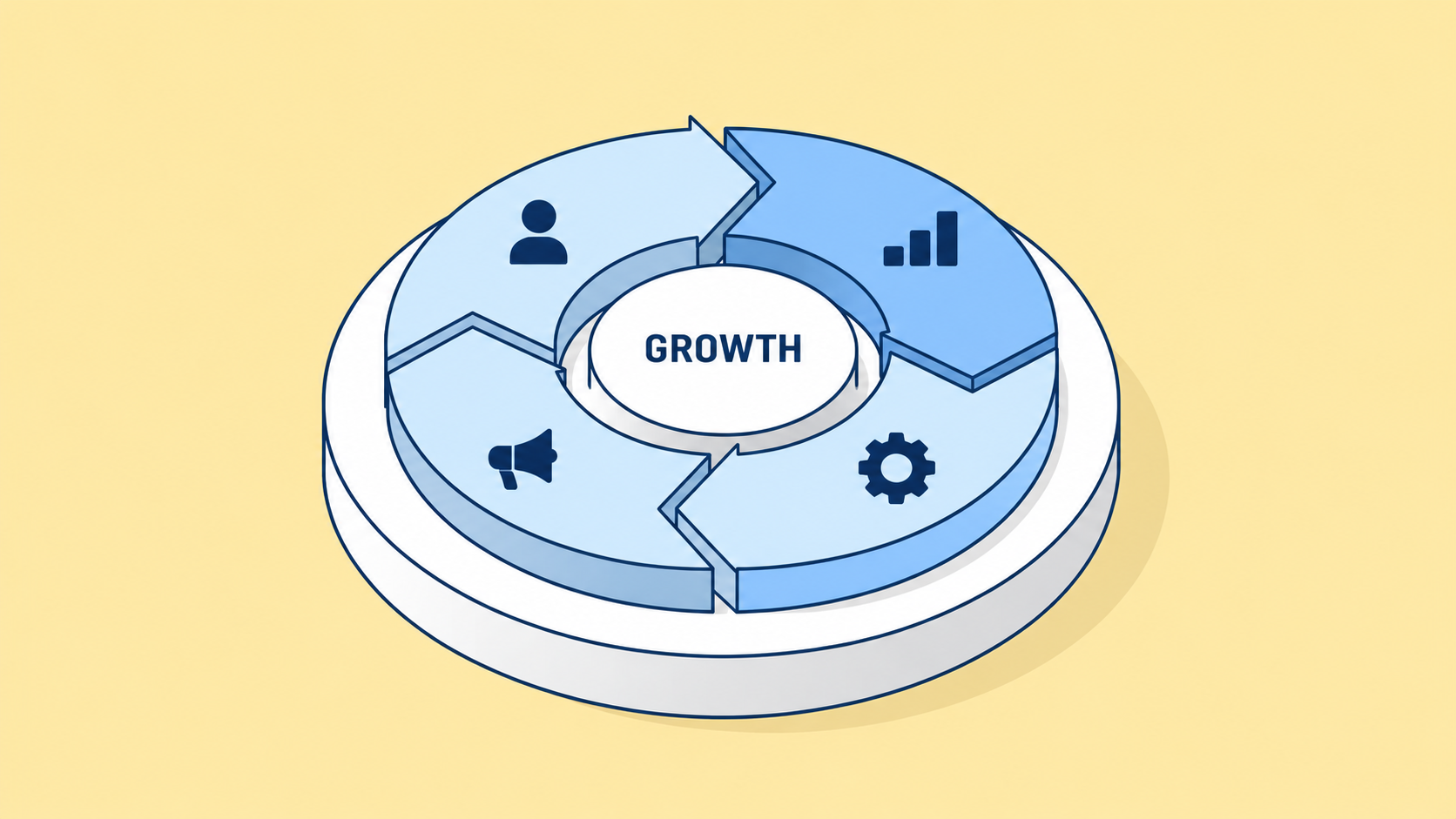
A strategic blueprint is only as strong as the materials used to build it. In the past, a Go-To-Market (GTM) strategy was often a static document that lived in a shared folder, disconnected from the daily actions of the sales and marketing teams. Today, the most effective strategies are not just written; they are operationalized.
By combining a rigorous GTM strategy with Revenue Operations (RevOps) and the HubSpot platform, you move from conceptual planning to technical execution. This approach ensures that your strategy is not just a vision, but a working system that drives measurable revenue growth.
Revenue Operations (RevOps)Revenue Operations is the strategic integration of sales, marketing, and success operations to provide a unified data set and automated workflows across the entire customer lifecycle. |
How to Operationalize Your GTM Strategy
Building a revenue engine requires a shift from creative tactics to technical precision. At Propello, we use the following four-step framework to bridge the gap between your market vision and your HubSpot infrastructure.
1. Architect Your Data Foundation in HubSpot
A successful GTM strategy requires total visibility. Before you can launch a product or enter a new market, you must ensure your engine room is ready. In HubSpot, this means setting up your CRM architecture to reflect your Ideal Customer Profile (ICP).
- Custom Property Mapping: Ensure you are capturing the specific technographic and firmographic data points that define your target market.
- Data Hygiene Protocols: Establish automated workflows to clean and standardize data as it enters the system, preventing the dirty data that stalls growth.
- Lifecycle Stage Definition: Clearly define the transition points between a Lead, an MQL, an SQL, and an Opportunity to ensure team alignment.
2. Engineer Your Messaging and Nurturing Sequences
Once the foundation is set, you must build the delivery system for your value proposition. RevOps allows you to automate the education of your prospects, ensuring that your messaging is delivered with perfect timing.
- Segmented Workflows: Use HubSpot automation to trigger specific content based on the pain points and industry of the prospect.
- Lead Scoring Models: Implement behavioral scoring that flags high-intent signals, allowing your sales team to focus on the accounts most likely to close.
- Symmetric Sales Enablement: Provide your sales reps with Playbooks and templates that mirror the marketing messaging, ensuring a seamless buyer experience.
3. Operationalize the Sales Handoff
The Growth Gap often occurs during the handoff from Marketing to Sales. RevOps eliminates this friction by creating a technical bridge between the two departments.
- Automated Lead Routing: Ensure that high-value leads are instantly assigned to the right sales rep based on territory, industry, or expertise.
- Service Level Agreements (SLAs): Build automated notifications that alert managers if a lead is not contacted within a specific timeframe.
- CRM Visibility: Give Sales full visibility into the prospect's marketing history, so every conversation is informed by previous interactions.
4. Measure and Tune the GTM Flywheel
An engineered strategy is never finished; it is constantly refined. HubSpot and RevOps provide the feedback loops required to see exactly where your GTM Flywheel is losing momentum.
- Closed-Loop Reporting: Track every deal back to its original marketing source to calculate true ROI and channel effectiveness.
- Pipeline Velocity Dashboards: Measure how long it takes for a prospect to move through each stage of the funnel.
- Churn and Expansion Tracking: Use Success data to identify why customers stay and where there are opportunities for automated upsells.
Conclusion: Building for Scale
Building a GTM strategy using HubSpot and RevOps is the difference between building a temporary shelter and a permanent skyscraper. It requires more effort in the initial design phase, but the result is a system that can support massive growth without collapsing under its own weight.
When your strategy is powered by GTM Engineering, your revenue becomes a predictable outcome of your architecture.
Ready to operationalize your GTM strategy?
Book a GTM Strategy Session with Propello to identify the gaps in your growth engine and design a scalable revenue system today.
Frequently Asked Questions (FAQ)
The first step is always an audit of your current data and tools. You must understand where your leaks are before you can build the automated workflows to fix them.
Technically, yes; however, without a central infrastructure to track data and automate tasks, you will quickly hit a ceiling where manual effort can no longer sustain growth.
RevOps provides a Single Source of Truth. When everyone is looking at the same data in HubSpot and working toward the same KPIs, the natural silos between departments begin to disappear.
No; actually, scaling companies benefit most from an early RevOps foundation. It is much easier to engineer a system for growth from the start than it is to fix a broken, fragmented architecture later.