
For decades, business growth was treated as a creative exercise. Success depended on the right "gut feeling" about a campaign or the individual heroics of a star sales representative. However, as markets become more saturated and buyer journeys more complex, these manual methods are reaching their breaking point.
The most successful organizations are no longer just "doing marketing"; they are engineering it. By treating the entire revenue process as a technical system, businesses can eliminate the guesswork that leads to plateaus. This shift marks the rise of GTM Engineering, a discipline that moves growth from a series of disjointed tactics into a predictable, automated engine.
GTM EngineeringGTM Engineering is the practice of applying technical principles, data pipelines, and automation to the Go-To-Market strategy to ensure scalable and predictable revenue growth. |
From Creative Tactics to Systemic Certainty
Traditional marketing often relies on high-volume activity, such as sending more emails or running more ads, in the hopes that some of it sticks. GTM Engineering reverses this approach by focusing on the infrastructure first.
When you engineer your growth, you stop asking "How do we get more leads?" and start asking "How do we build a system that converts the right leads automatically?" This transition is driven by three major shifts in the modern business environment:
1. The Death of the Linear Funnel
The buyer journey is no longer a straight line from awareness to purchase. Modern buyers interact with content, sales reps, and automated sequences across multiple platforms simultaneously. GTM Engineering uses data to track these non-linear paths, ensuring that the right message reaches the buyer regardless of where they are in the flywheel.
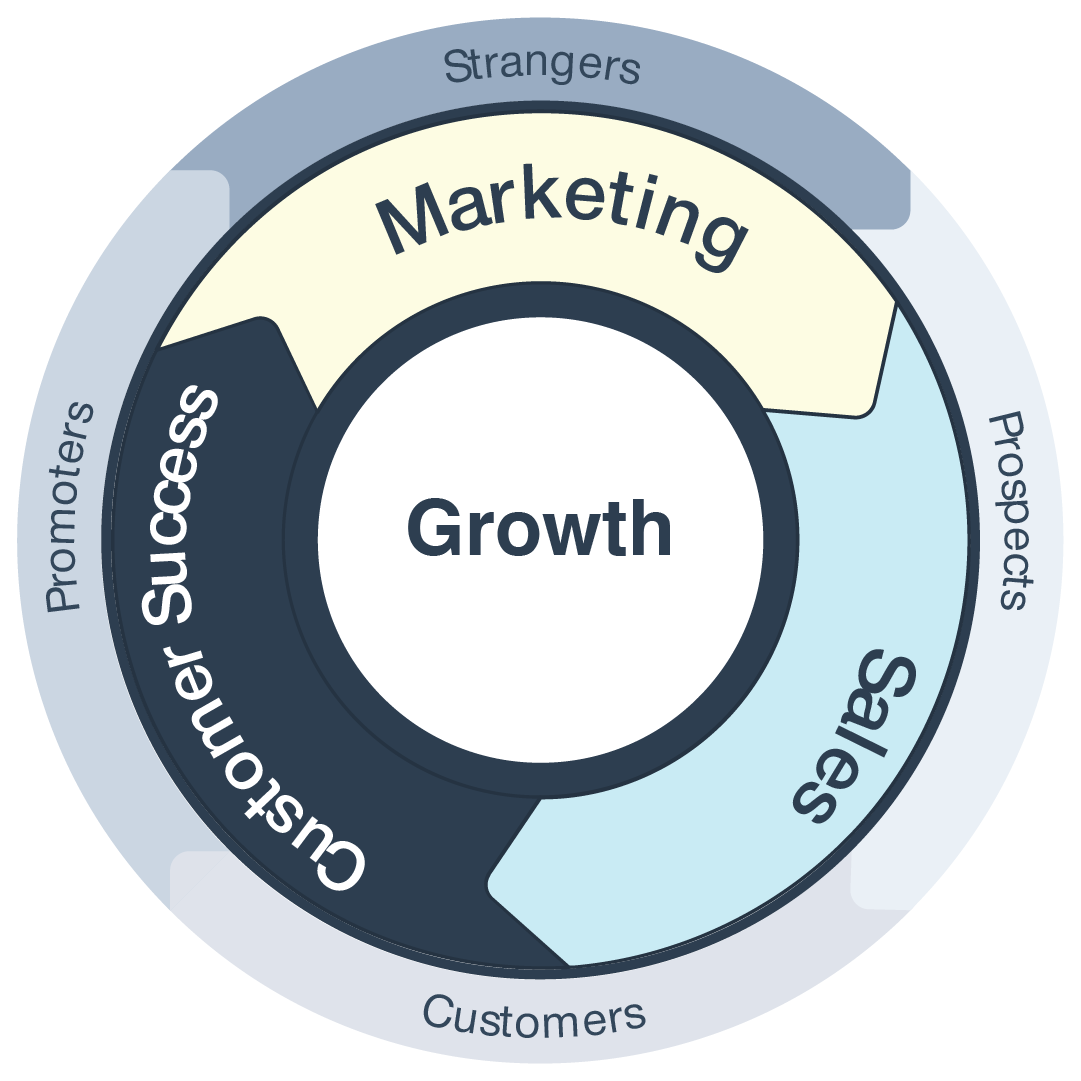
2. The Integration of RevOps and Strategy
In the past, Revenue Operations (RevOps) was seen as a back-office function that managed the CRM. Today, it is the heartbeat of the GTM strategy. GTM Engineering integrates strategy and operations, ensuring that your HubSpot environment is not just a database, but a proactive tool that triggers sales plays based on real-time data.
3. The Automation of the "Grunt Work"
Scale is often hindered by manual tasks; reps spending hours researching prospects or marketers manually segmenting lists. Engineering these processes allows technology to handle the repetitive work, freeing up your human talent to focus on high-value strategy and relationship building.
How Data Fuels the Flywheel
At Propello, GTM Engineering is what allows us to turn a strategy into a functional reality. We focus on creating high-integrity systems that leverage data at every stage of the customer journey:
- Signal-Based Sales Plays: We build systems that alert your sales team when an ICP (Ideal Customer Profile) shows high-intent behavior, allowing for surgical outreach instead of cold calling.
- Automated Feedback Loops: By connecting your sales data back to your marketing spend, we can see exactly which efforts are driving revenue and which are simply creating noise.
- CRM Architecture: We design HubSpot environments that are built for growth, ensuring your data is clean, accessible, and actionable across the entire organization.
Conclusion: The New Standard for Growth
The organizations that will lead their industries in the coming years are those that recognize growth is a technical challenge. Strategy provides the roadmap, but GTM Engineering provides the vehicle. By building a system that values precision over volume, you create a sustainable advantage that your competitors cannot replicate through ad spend alone.
Ready to engineer your revenue engine?
Get a Free GTM Audit to identify the gaps in your growth engine and design a scalable GTM system.
Frequently Asked Questions (FAQ)