In the early stages of growth, many companies rely on "brute force" to acquire customers. They depend on the individual charisma of a founder or the high-intensity outreach of a small sales team.
While this can generate initial revenue, it is not a scalable model. Brute force eventually hits a ceiling; burnout sets in, customer acquisition costs rise, and growth becomes unpredictable.
A defined Go-To-Market (GTM) strategy is the structural solution to these scaling pains. It replaces the "heroics" of a few individuals with a repeatable system. By moving from a reactive stance to an engineered approach, your business stops hoping for growth and starts producing it.
GTM StrategyA Go-To-Market (GTM) strategy is a structured plan detailing how a company delivers its unique value proposition to a specific audience to achieve a competitive advantage. |
1. Predictability Over Luck
The most dangerous words in business are "we had a good month, but we are not sure why." Without a defined GTM strategy, your revenue is subject to market whims and individual performance.
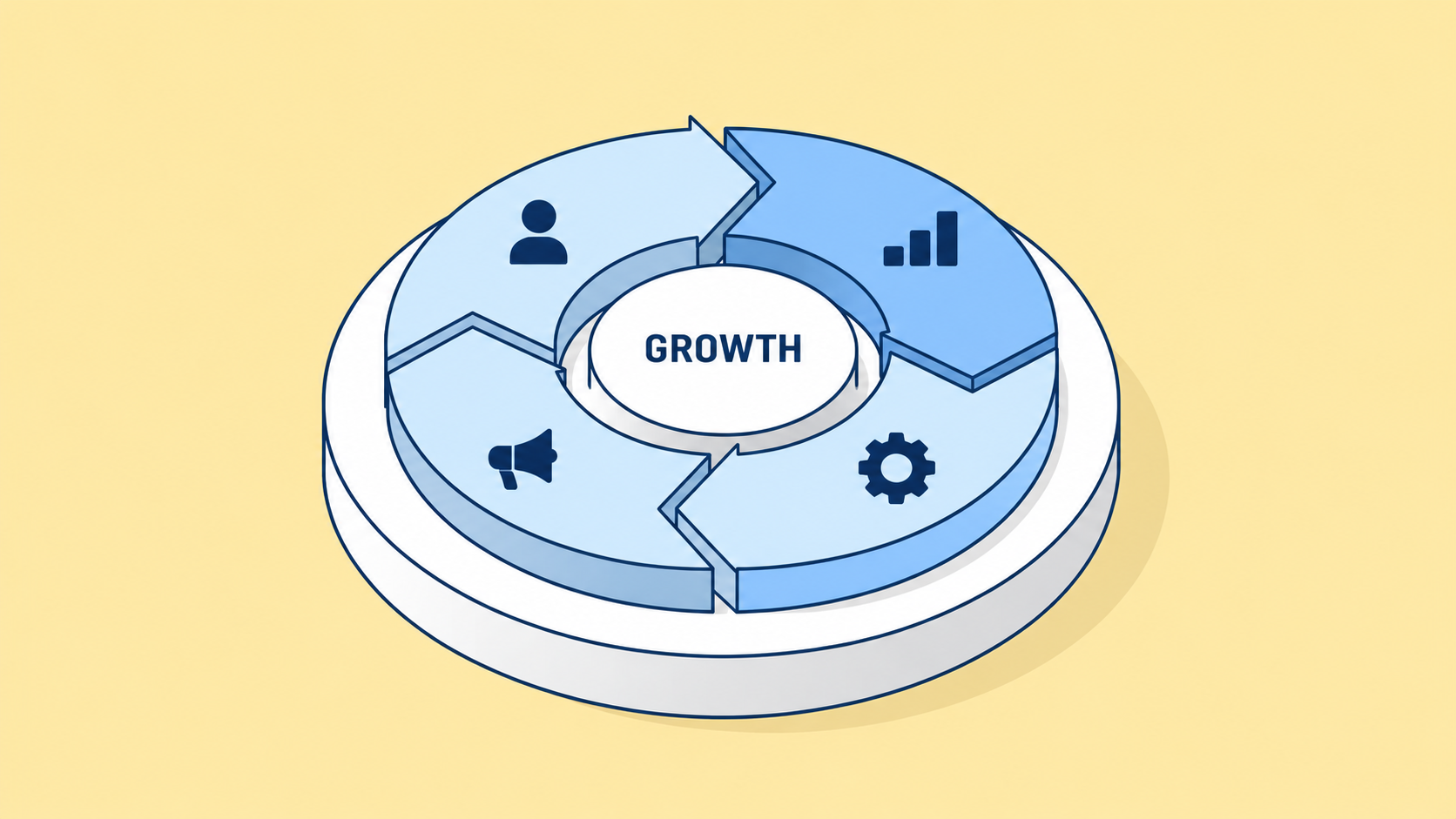
A structured strategy allows you to build a GTM Flywheel where inputs directly lead to predictable outputs. When you engineer your growth, you can forecast your revenue with confidence because you understand the mechanics behind every deal.
2. Maximized Resource Efficiency
In a B2B environment, your most expensive resources are time and budget. If your marketing team is generating leads that your sales team cannot close, you are burning capital.
A defined strategy ensures that every department is aimed at the same Ideal Customer Profile (ICP). This alignment eliminates the "spray and pray" approach, ensuring that every ad dollar and every sales hour is spent on high-probability opportunities.
3. Faster Time-to-Value
Markets move quickly, and the "first-mover advantage" is often decided by operational speed. A defined GTM strategy provides the roadmap that allows your team to move with precision.
By defining your messaging and channels upfront, you avoid the pivot loops and internal debates that slow down market entry. You reach your customers faster, solve their problems sooner, and realize revenue more efficiently.
4. Seamless Team Synchronization
Internal friction is a silent growth killer. When Marketing, Sales, and Product teams operate in silos, the customer experience suffers and internal morale drops.
A GTM strategy acts as the "Single Source of Truth" that forces revenue alignment. It provides a shared set of goals and data, ensuring that the people building the product and the people selling it are reading from the same playbook.
5. Reduced Risk of Market Rejection
Launching a new product or entering a new territory without a GTM strategy is an expensive gamble. A defined strategy requires you to validate your assumptions about the market before you commit significant resources.
By using GTM Engineering to test your messaging and ICP early, you minimize the risk of building something the market does not want or targeting an audience that will not pay.
Conclusion: Engineering the Path to Scale
A Go-To-Market strategy is not a luxury for large corporations; it is a necessity for any business that intends to scale without friction. By shifting from fragmented tactics to a unified system, you create a sustainable competitive advantage. You stop reacting to the market and start architecting your position within it.
Ready to stop guessing and start engineering your growth?
Get a Free GTM Audit to identify the gaps in your strategy and start building your scalable revenue engine today.
Frequently Asked Questions (FAQ)
Without a GTM strategy, you likely suffer from inconsistent revenue, high team turnover, and inefficient spend. You might grow in the short term, but you will eventually hit a ceiling that you cannot break through without a system.
It provides them with "warm" leads that actually fit your ICP, along with the specific messaging required to close them. It removes the burden of "finding" the market from the sales team, allowing them to focus entirely on "closing" the market.
No; a business plan is a broad document covering finance, operations, and long-term vision. A GTM strategy is a tactical, execution-focused blueprint specifically for delivering a product to a market and capturing revenue.
While foundational alignment happens quickly, the full impact of a GTM Flywheel typically becomes visible within 90 days as your data pipelines and automated sequences begin to gain momentum.