
If you lead revenue at a growing B2B company, a demand generation strategy is the written plan for making the right buyers aware of you, interested in you and ready to talk to sales before they ever fill in a form. You build it in six steps: audience, offer, channels, content, capture path and measurement.
This guide is for CEOs, founders, CROs and revenue leaders, and for the marketing and sales teams who will run the plan. You get a finish line for every step, the checks to make before you start and the mistakes that waste a first quarter.
|
Demand Generation Strategy The plan a B2B company follows to create awareness and interest among its target audience, nurture that interest and hand ready buyers to sales, with each stage measured against pipeline and revenue. |
By the end you will have an effective demand generation plan your sales team can act on
A usable plan, often called demand gen for short, is short enough to read in one sitting and specific enough for a new marketer to run without asking you.
- A written description of your ideal customers and a list of the target accounts that fit.
- One offer that earns attention from buyers who are not ready to buy yet.
- Two or three chosen channels, each with an owner and a reason.
- A content plan tied to the questions buyers ask at each stage of the customer journey.
- A capture path that turns interest into a conversation with sales.
- A short list of measures and a review rhythm.
What to have in place before you start
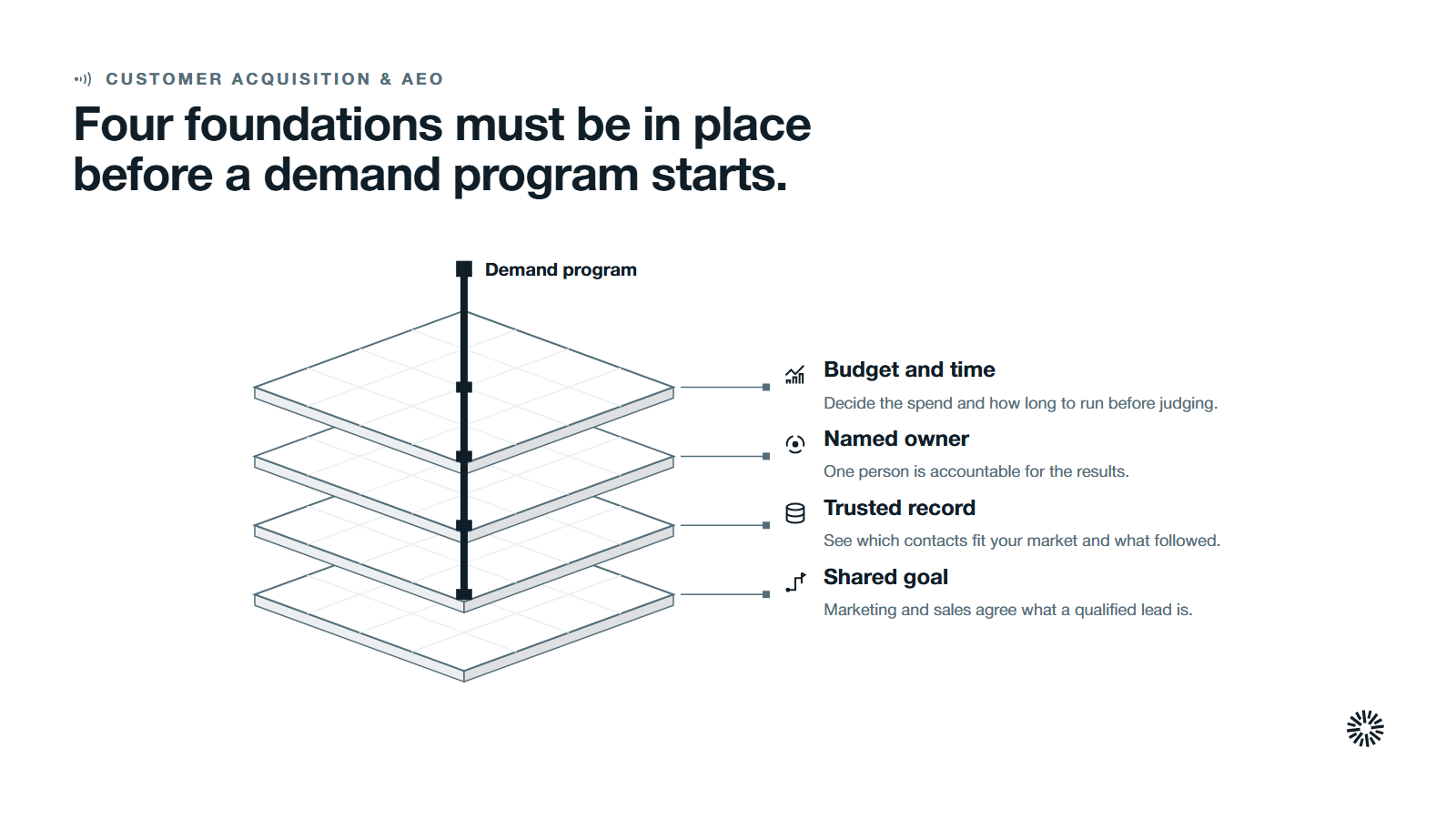
A strong demand generation program rests on a few foundations, and it only drives revenue when the revenue teams share them. Close any gap here first, because every later step leans on them.
- A shared goal. Marketing and sales leaders agree on what counts as a qualified lead and on the revenue the plan should support.
- A customer record you can trust. You can see which contacts and companies belong to your market, where they came from and what happened next. In HubSpot, a campaign groups the emails, blog posts and landing pages that belong to one effort, which makes that view possible.
- A named owner. One person is accountable for results, whether that is a demand generation marketer or a small group of demand generation specialists, even when several people contribute.
- A budget and a time frame. Decide how much you will invest and how long you will run the plan before judging it.
If your buyer is still loosely defined, write it down first with the ideal customer profile template. It takes an afternoon and saves months.
Demand generation vs lead generation: where each fits
Demand generation builds interest in a category and in your company, and it builds credibility and trust with potential buyers over time. Lead generation captures contact details from people who already show interest, and it is a subset of demand generation marketing.
You need both: demand generation creates the pool of interested buyers, and lead generation harvests the ones who are ready to act. For a fuller explanation of the discipline, read what demand generation is.
Demand generation covers the whole sales funnel, from creating awareness to nurturing interest, so the demand generation funnel is wider at the top than a lead-focused one.
Demand generation is a long-term strategy that covers every stage of the customer journey. It is one part of your wider marketing strategy, and the demand generation process runs alongside your sales process, not ahead of it.
There are two ways to grow demand. Creating demand makes buyers care about a problem before they search for a solution. Capturing existing demand meets buyers who already search. Strong plans do both, because the aim is to generate demand that is yours, not rented from an ad auction.
A B2B demand generation strategy in six steps
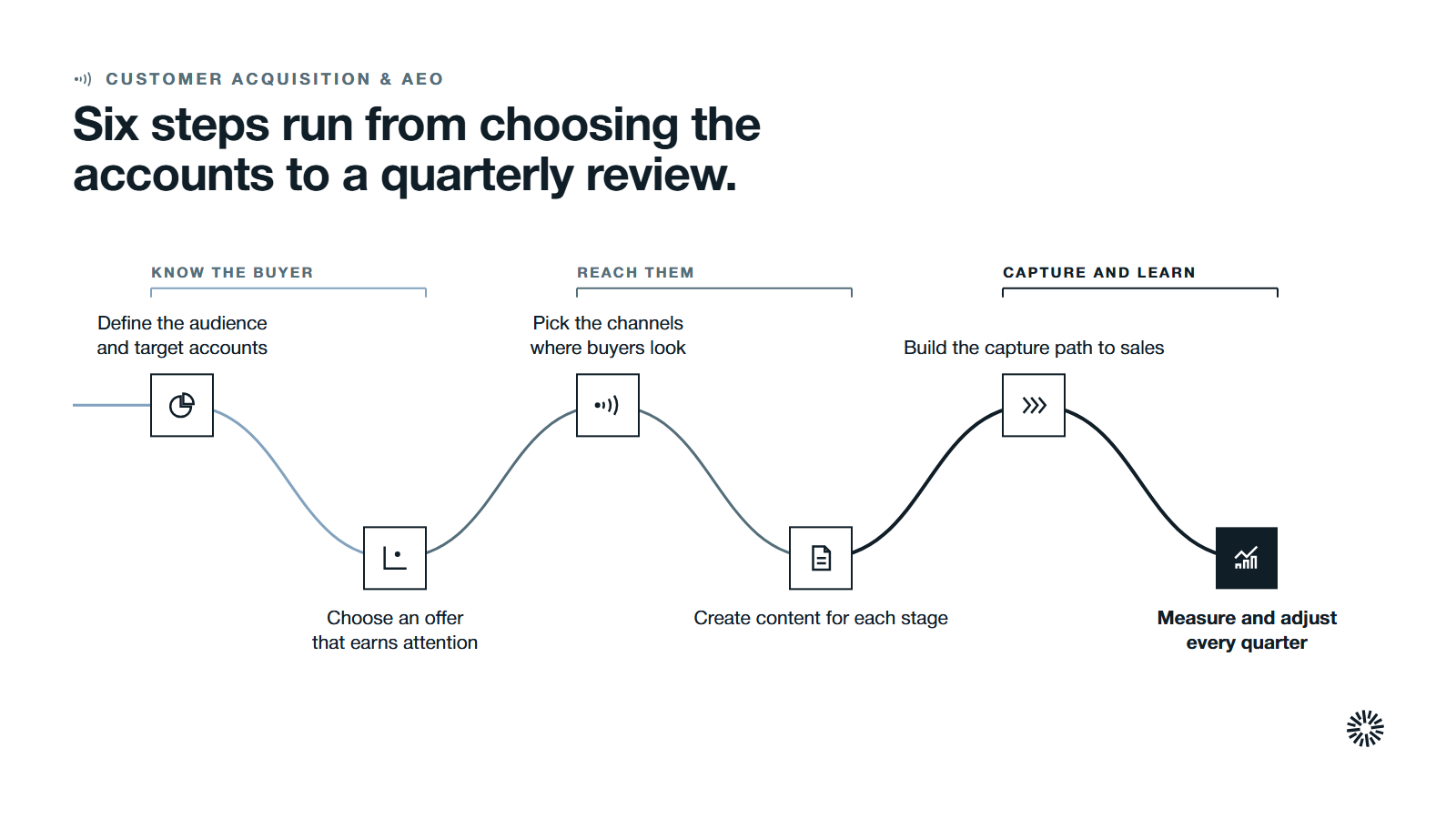
Demand generation marketing covers many tactics, and your marketing efforts pay off only when they are tied to pipeline. Each step ends with what done looks like. Work through them in order, because later steps depend on earlier answers.
1. Define the target audience and the accounts you want
Start with the buyers, not the tactics. Describe your ideal customers by company size, industry, the problem they feel and the roles involved in the decision. B2B purchases usually involve a group, so list the people who decide, the people who influence and the people who will use what you sell.
Then turn the description into a named list of target accounts. A list of high value accounts gives your marketing and sales departments the same picture of who matters, and gives sales and marketing teams a shared target.
It also lets you judge your work by whether the right companies are paying attention, not by raw traffic.
Check where your best customers came from and what they had in common. Their traits tell you which potential customers and potential buyers to chase and which to ignore.
You are done when one page describes your ideal customers, a list of target accounts exists and sales has agreed it is the right list.
2. Choose an offer that earns attention before buyers are ready
Most of your market is not buying this quarter. An offer for them cannot be a sales call. It should be something useful enough that a buyer will give you attention or an email address for it: a guide to a decision they face, a working template, a webinar on a hard problem.
Pick the problem your product solves best, then build the offer around the question a buyer asks before they start looking for a vendor. This is how you generate interest without pushing a pitch.
Keep a second offer for buyers who are close to a decision, such as a consultation or an assessment. The first builds awareness, and the second moves a ready buyer to a conversation.
You are done when you can state each offer in one sentence, name the buyer it is for and say what that buyer does next.
3. Pick the channels where your buyers already look
You do not need every channel. Choose the few where your target audience already spends time, then do them well. Used together, a small set of channels raises your visibility and engagement more than any one of them alone. Pick demand generation tactics by fit, not fashion. Common demand generation activities for B2B include:
- Search engine optimization. Content that answers the questions buyers type into a search engine, so you are found at the start of their research.
- Content marketing. Articles, guides and tools published on your own site. They build trust and position your company as an authority on the problem you solve.
- Organic social media campaigns. Posts and conversation on the professional networks where your buyers work.
- Inbound marketing. Helpful content, forms and email that draw buyers to you instead of reaching out cold.
- Email. Automated, segmented nurture sequences that keep each group of leads engaged with relevant messages as their buying journey unfolds.
- Paid advertising. Ads aimed at defined audiences. Pay-per-click search ads capture high-intent buyers who are actively searching. Use paid advertising to speed up what already works.
- Partnerships and referrals. Partner and customer introductions that extend your reach efficiently.
- Events and webinars. Live formats that build trust with a small, relevant group.
- Account based marketing (ABM). Coordinated outreach to a short list of target accounts.
Match channels to your audience and your capacity.
A small team does better with two channels done consistently than with six done thinly. The right mix also depends on how your buyers research. The 6sense 2025 Buyer Experience Report found that 94% of buying groups ranked their preferred vendors before first contact. Your channels need to put you in that early conversation.
You are done when each chosen channel has an owner, a purpose in the plan and a reason it suits your buyers.
4. Create the content that builds trust at each stage
Content is how demand generation works at scale. Map it to the buyer journey, so every stage has an answer to the question buyers ask at that point. If you need a refresher on the stages, see the B2B buyer journey.
- Awareness. Content that names a problem your buyers recognize, written for people who are not yet looking for a vendor. Create content around the questions behind their search intent.
- Consideration. Comparisons, how-to guides and explainers that help a buyer judge their options.
- Decision. Proof, a clear description of how you work and sales enablement material that makes a yes easy.
Personalized content helps when it is real. The Content Marketing Institute's 2025 survey of B2B marketers found that 89% say their organizations personalize content, yet 59% describe their personalization as basic. Go beyond a first name: change the example, the proof and the next step for each group of buyers.
Good content speaks to the pain points your buyers feel, and high-intent content, such as comparisons and pricing explainers, fuels the buyers who are close to acting. Thought leadership and community involvement build familiarity with potential buyers before they are ready to talk.
Write down your content strategy in a simple calendar. Plan fewer, better pieces, and decide in advance how each one will reach your target audience. Customer success stories belong at the decision stage, and only when the customer has approved them.
You are done when each stage of the journey has at least one piece of content, each piece has a channel and an owner, and the calendar covers the next quarter.
5. Build the capture path from first interest to a sales conversation
Interest that goes nowhere is wasted. The capture path is the route a buyer follows from their first visit to a conversation, and it should be built before you spend on promotion.
- A buyer finds your content and sees a clear next step.
- A form or booking page records who they are and where they came from. These lead capture mechanisms turn anonymous traffic into identifiable prospects.
- A follow-up sequence sends useful material, based on what they read.
- A scoring rule marks a contact as ready when their behavior and fit meet an agreed bar.
- Sales receives the contact with the history attached and follows up quickly.
Leveraging intent data and your own site activity shows which accounts are actively researching solutions, so you can send the most promising prospects to sales first. Your sales engagement should start with what the buyer has already read, not with a cold script.
A lead scoring system helps your team prioritize leads likely to convert and spends sales resources where they count.
Lead scoring models do not need to be complicated. Give points for fit, such as company size and role, and for engagement, such as repeat visits and replies. Agree the threshold with sales, then review it every quarter.
Marketing automation keeps this path moving without manual work. Its job is to deliver the right message at the right time, and to hand sales quality leads with context. The demand generation tools you need are modest: a CRM, forms, email and analytics such as Google Analytics.
Aligning sales and marketing teams on these rules improves demand generation results, because leads move to sales cleanly. Speed matters at the handoff. When a ready buyer asks for contact, the delay between request and reply is where a promising conversation is lost. Agree a response time between marketing and sales, and track it.
You are done when a test contact can move through every stage, sales receives it with its history and everyone knows who follows up and how fast.
6. Measure what the plan produces and adjust every quarter
A strategy you cannot measure cannot improve. Pick a few demand generation metrics, tie each to the goal you set, and review them on a fixed schedule. Start with measures that sit close to revenue:
- Pipeline created. The value of opportunities that started from the plan, which is the total revenue from qualified opportunities.
- Meetings and opportunities generated. The count of meetings booked and opportunities opened from your leads, which gauges lead quality.
- Qualified leads and conversion rates. How many contacts become opportunities, and how many opportunities become customers.
- Sales cycle length. How long it takes an opportunity to close.
- Customer acquisition cost. Total campaign cost divided by the customers acquired.
- Average deal size and customer lifetime value. Total revenue divided by closed deals, and the average profit a customer brings over time.
- Share of target accounts engaged. How many of your named accounts are paying attention.
Some effects will never appear in a report. Buyers read, listen and talk to peers without leaving a trace you can attribute.
Add a question to your forms asking how people first heard of you, and read the answers beside your analytics.
To measure demand generation performance honestly, combine the numbers with what buyers say. Consistent measurement of key performance indicators keeps the work in line with business growth, and a mature program gives you a clearer view of the return on your marketing spend.
Watch the sales pipeline closely, because it shows whether interest is turning into opportunities. Review monthly to catch problems and quarterly to decide what to continue, change or stop. Keep a short list of experiments, each with a question, a test and a decision.
You are done when a dashboard shows pipeline, conversion and cost by channel, the first review is booked and one change has been chosen from what the numbers say.
Mistakes to avoid when building the plan
An effective demand generation program avoids a few predictable failures. Check your plan against this list.
- Starting with channels, not buyers. Picking tactics first leaves you promoting to the wrong people.
- Measuring only lead volume. More names on a list is not more demand. Judge the plan by pipeline and customers.
- Gating everything. Putting every asset behind a form hides your best thinking from buyers who are not ready to share their details.
- Splitting marketing and sales. When the two teams disagree on who a qualified lead is, good leads go cold.
- Doing too much at once. Six thin channels teach you less than two strong ones.
- Ignoring existing demand. Capturing buyers who already search for solutions like yours is often the fastest early result, so cover that ground too.
- Skipping the follow-up. A form with no sequence behind it is a leak.
- Judging too soon. Demand takes time to build, so set the review dates before you begin and hold to them.
What you gain when this is done properly
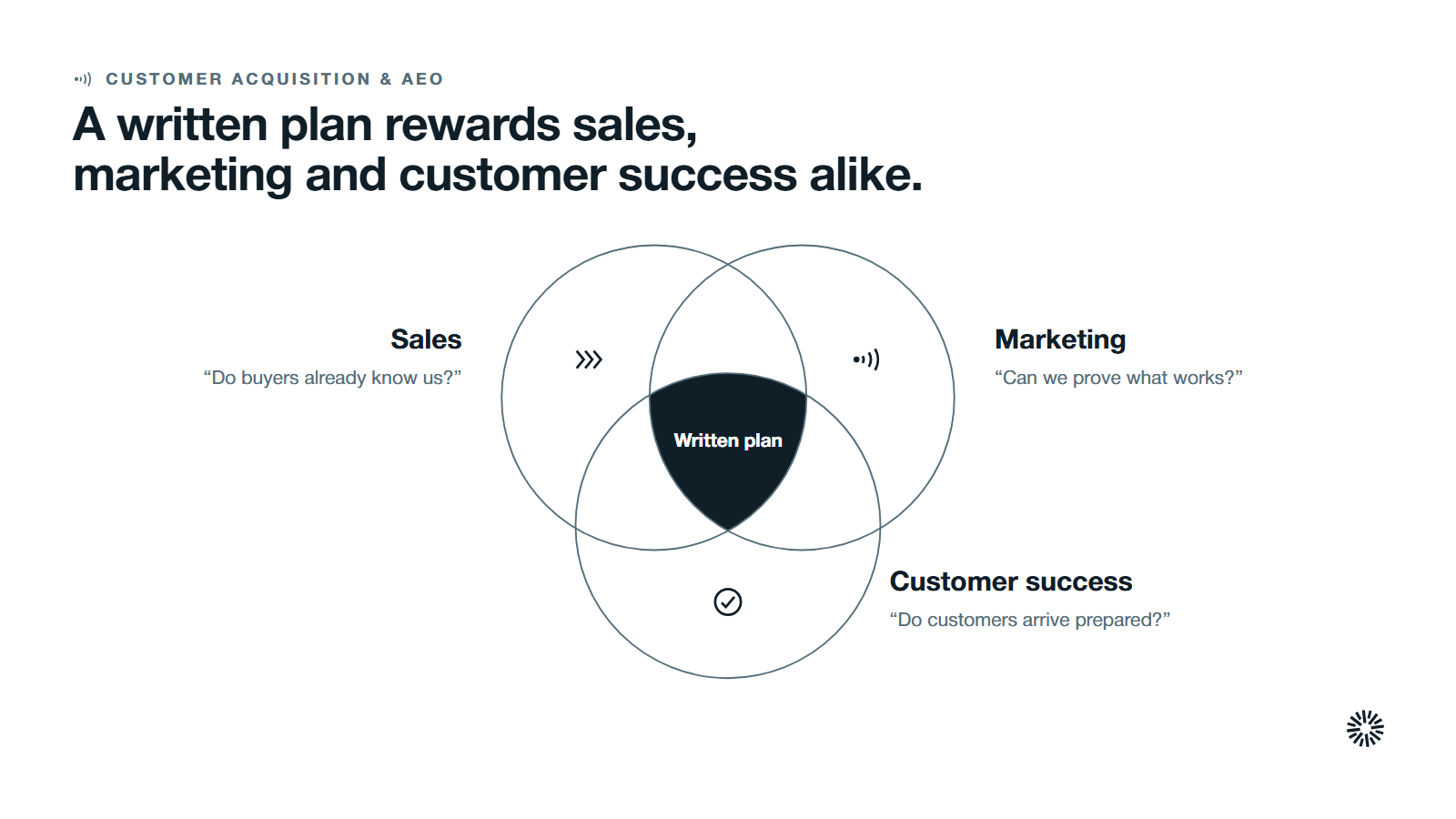
A written plan turns scattered activity into a system. Each team gains in a different way.
Sales gets better conversations
Sellers meet buyers who already know the company, understand the problem and have read something useful. The pipeline that arrives carries its history, so the first call starts further along.
Marketing gets a clear job and a way to prove it
Marketing teams work to a defined audience and a short list of channels, and report on pipeline in the same terms as sales. The case for budget rests on evidence instead of opinion.
Customer success gets customers who arrive prepared
Customers who found you through useful content arrive with realistic expectations. Customer success starts onboarding from a stronger position, and satisfied customers support customer retention and the next round of referrals.
Build demand on purpose, not by accident
A demand generation strategy is a sequence of decisions: who you serve, what you offer, where you show up, what you publish, how interest becomes a conversation and how you know it worked. Write each decision down and review it on a schedule.
Propello designs and builds connected GTM systems on HubSpot. If you want your audience, capture path and reporting set up so that marketing and sales work from one view of demand, an audit is the place to start.
